What is a fake fossil?
The Fossil Authenticity Project provides resources for fossil collectors and enthusiasts to identify fake fossils.
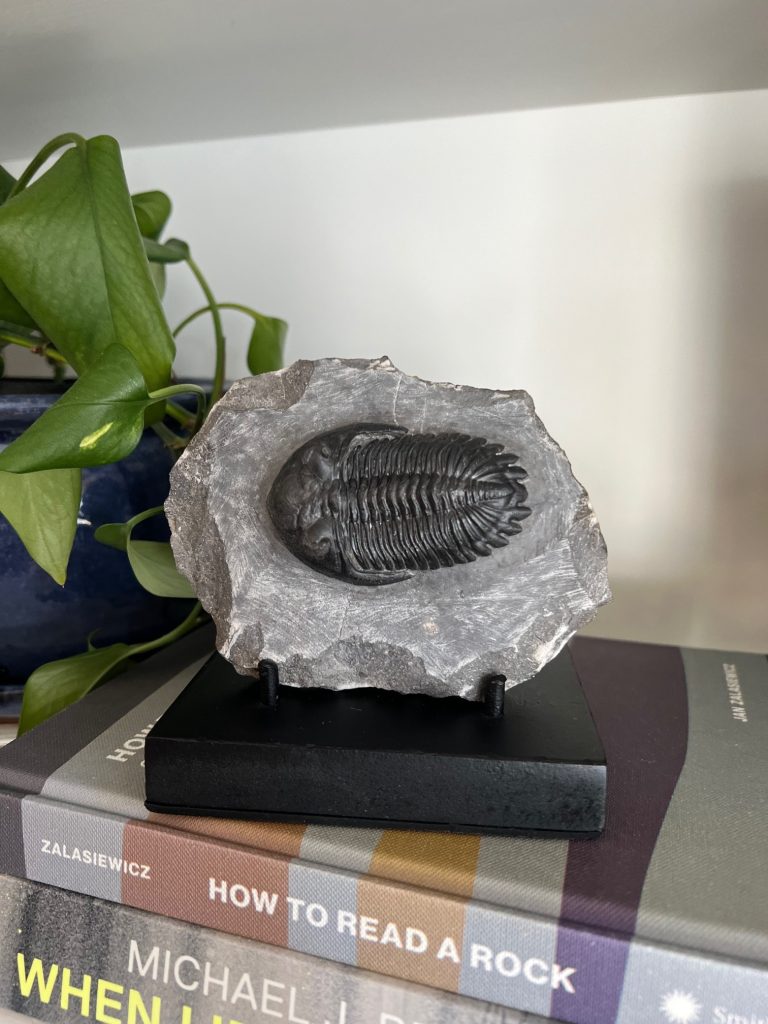
Fossils can be fake, or inauthentic, in many forms. Some fossils may be simply misidentified; authentic teeth from the dinosaur Carcharodontosaur, for example, are more readily available and resultantly more affordable than those of the Tyrannosaur, so some unscrupulous or misinformed sellers may substitute the latter for the former. Others are heavily repaired or altered, while some are entirely cast in resin or plaster. What constitutes an acceptable degree of restoration varies on the kind of fossil and the buyer in question, but we provide images of various forms of alteration to inform buyers and provide contextualization on the fossil industry.
Fossils are important for many reasons. Fossils allow paleontologists to better understand the past, contributing to knowledge about evolutionary processes, environmental change over time, and taxonomic relationships of extant, or living, organisms. Fossils are also an important component of geoheritage, the natural, geological aspect of cultural and scientific heritage. Fossils, too, have significantly informed popular culture. Images of the Tyrannosaurus rex are enduring across film and TV, for example.
Paleontology is unique among the sciences in public engagement. While the chance that any particular organization will undergo fossilization is vanishingly unlikely, and some kinds of fossils are exceptionally rare, as a result of hundreds of millions of years of geological processes there are a great number of fossils. These fossils are a major way that the public engages with paleontology, and this site serves as a resource to inform prospective fossil buyers and collectors about the challenges of fake fossils. Fake fossils can be dissapointing and costly, dissuading the public from pursuing their interest in paleontology further or hampering geotourism efforts across the globe. A scientifically informed and engaged amateur community can only help academic paleontologists.